Tuesday, January 29, 2019

Super-Mendelian inheritance mediated by CRISPR–Cas9

A gene drive biases the transmission of one of the two copies of a gene such that it is inherited more frequently than by random segregation. Highly efficient gene drive systems have recently been developed in insects, which leverage the sequence-targeted DNA cleavage activity of CRISPR–Cas9 and endogenous homology-directed repair mechanisms to convert heterozygous genotypes to homozygosity. If implemented in laboratory rodents, similar systems would enable the rapid assembly of currently impractical genotypes that involve multiple homozygous genes (for example, to model multigenic human diseases). However, such a system has not yet been demonstrated in mammals. Here  an active genetic element that encodes a guide RNA, which is embedded in the mouse tyrosinase (Tyr) gene, is used  to evaluate whether targeted gene conversion can occur when CRISPR–Cas9 is active in the early embryo or in the developing germline. Although Cas9 efficiently induces double-stranded DNA breaks in the early embryo and male germline, these breaks are not corrected by homology-directed repair. By contrast, Cas9 expression limited to the female germline induces double-stranded breaks that are corrected by homology-directed repair, which copies the active genetic element from the donor to the receiver chromosome and increases its rate of inheritance in the next generation. These results demonstrate the feasibility of CRISPR–Cas9-mediated systems that bias inheritance of desired alleles in mice and that have the potential to transform the use of rodent models in basic and biomedical research.

http://www.nature.com/articles/s41586-019-0875-2

Sunday, January 20, 2019

Plants fight fungi using kiwellin proteins

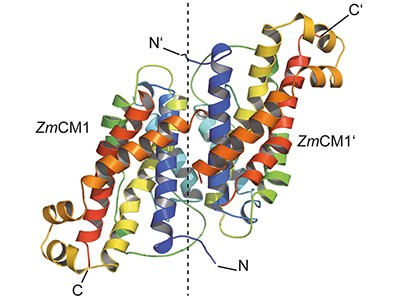
Fungal pathogens of plants  often secrete proteins that aid growth and reproduction in the host. These are termed effector proteins, and some are deregulated metabolic enzymes that manipulate key metabolic pathways in plants. A new protein has been identified in maize which  blocks the enzymatic activity of a fungal effector enzyme, thereby thwarting the effector’s ability to influence maize metabolism in a way that limits the plant’s defence response.
For more details: https://www.nature.com/articles/d41586-019-00092-2

INTRONS HELP TO OVERCOME STARVATION


Introns are ubiquitous features of all eukaryotic cells. Introns need to be removed from nascent messenger RNA through the process of splicing to produce functional proteins.Physical presence of introns in the genome promotes cell survival under starvation conditions. A systematic deletion set of all known introns in budding yeast genes indicates that, in most cases, cells with an intron deletion are impaired when nutrients are depleted. This effect of introns on growth is not linked to the expression of the host gene, and was reproduced even when translation of the host mRNA was blocked. Transcriptomic and genetic analyses indicate that introns promote resistance to starvation by enhancing the repression of ribosomal protein genes that are downstream of the nutrient-sensing TORC1 and PKA pathways.

www.nature.com/articles/s41586-018-0859-7?fbclid=IwAR3GQJDf7E_qBhZ6zKLjnhLipzubL7pxfsXbyJhaAz42MYyPTfYyJe08vJQ

Tuesday, November 13, 2018

Bacteria Live in Brain Cells

BACTERIA IN BRAIN


Images of human brain slices reveal bacteria, shown here to the left of a blood vessel—tantalizing but preliminary evidence of a “brain microbiome.”
https://www.sciencemag.org/news/2018/11/do-gut-bacteria-make-second-home-our-brains

Cross-talk between alternate polyadenylation and miRNA

3′ UTRs play important roles in the gene regulation network via their influence on mRNA stability, translational efficiency, and subcellular localization. For a given gene, 3′ UTRs of different lengths generated by alternative polyadenylation (APA) may result in functional differences in regulation. The mechanistic details of how length changes of 3′ UTRs alter gene function remain unclear. By combining APA sequencing and polysome profiling, we observed that mRNA isoforms with shorter 3′ UTRs were bound with more polysomes in six cell lines but not in NIH3T3 cells, suggesting that changing 3′ UTRs to shorter isoforms may lead to a higher gene translational efficiency. By interfering with the expression of TNRC6A and analyzing AGO2-PAR-CLIP data, we revealed that the APA effect on translational efficiency was mainly regulated by miRNAs, and this regulation was cell cycle dependent. The discrepancy between NIH3T3 and other cell lines was due to contact inhibition of NIH3T3. Thus, the crosstalk between APA and miRNAs may be needed for the regulation of protein translational efficiency.

For Details visit: https://genome.cshlp.org/content/28/11/1656.full.pdf+html

Thursday, June 30, 2016

Cancer Moonshot initiative on Cancer Genomics


You are aware that cancer is the second most deadly disease killing  thousands of people daily. As  cancer is a complex disease application of high throughput genomics methods opens up new avenues for understanding and treating the disease.  Cancer genomics programme is   moving to the next level because of the initiatives made by Cancer Moonshot Programme (Click here to read more about Cancer Moon Shot Programme). As part of the US-Cancer Moonshot and the US-President’s Precision Medicine Initiative, Foundation Medicine is more than doubling the total number of patients represented within the NCI's Genomic Data Commons (GDC), bringing its total to over 32,000 patients accumulated in just over a month.  At its launch in early June, the GDC already shared more than five petabytes of raw unprocessed genomic data from large research projects on nearly thirty tumor types from more than 14,000 patients, along with associated clinical data (e.g. clinical diagnosis, treatment history, survival data), creating a foundational system for broad sharing and analysis of cancer genomic data, which is critical for advancing the field of precision medicine and improving the care of cancer patients.

Tuesday, May 31, 2016

Why I want to discuss about climate change now ?:


There is a real possibility of Donald Trump becoming US president. He does not believe in climate change. Read his views below:


"Well, first of all, I’m not a believer in global warming. And I’m not a believer in man-made global warming. It could be warming, and it’s going to start to cool at some point. And you know, in the early, in the 1920s, people talked about global cooling. I don’t know if you know that or not. They thought the Earth was cooling. Now, it’s global warming. And actually, we’ve had times where the weather wasn’t working out, so they changed it to extreme weather, and they have all different names, you know, so that it fits the bill. But the problem we have, and if you look at our energy costs, and all of the things that we’re doing to solve a problem that I don’t think in any major fashion exists. I mean, Obama thinks it’s the number one problem of the world today. And I think it’s very low on the list. So I am not a believer, and I will, unless somebody can prove something to me, I believe there’s weather. I believe there’s change, and I believe it goes up and it goes down, and it goes up again. And it changes depending on years and centuries, but I am not a believer, and we have much bigger problems. You know, I talk about global warming. You know, to me, the worst global warming, and I mentioned this to you once before, is nuclear warming. That’s our global warming. That’s what I see, because we have incompetent people, and we have these rogue nations, and not even rogue nations anymore. You know, we had a case where Vladimir Putin about three months ago threw out the nuke word. And I never thought I’d hear that from a Russia. But he said they’d better, essentially, they’d better be careful, because you know, we are a nuclear nation. That was a hell of a statement for him to make. And that’s a statement that’s made because of a lack of respect."


If this is the belief of the future US president what happens to the Paris Agreement. He might scrap the agreement. If he becomes US president the world may be in trouble. I will post soon Scientific evidences available on current climate change

Friday, July 3, 2015

The 100,000 Genomes Project by UK

The project will sequence 100,000 genomes from around 70,000 people. Participants are NHS patients with a rare disease, plus their families, and patients with cancer.
The aim is to create a new genomic medicine service for the NHS – transforming the way people are cared for. Patients may be offered a diagnosis where there wasn’t one before. In time, there is the potential of new and more effective treatments.
The project will also enable new medical research. Combining genomic sequence data with medical records is a ground-breaking resource. Researchers will study how best to use genomics in healthcare and how best to interpret the data to help patients. The causes, diagnosis and treatment of disease will also be investigated. We also aim to kick-start a UK genomics industry. This is currently the largest national sequencing project of its kind in the world.

What is the US plan for next 5 years in Plant Genomics ?

NATIONAL PLANT GENOME INITIATIVE FIVE-YEAR PLAN: 2014–2018

Major objectives:

Objective 1: Develop a new generation of databases and tools to enable every step in the innovation chain from basic discovery to translation into practical application and widespread use.

Objective 2: Create a network of plant germplasm resources to meet the Nation’s research and breeding needs for the 21st century

Objective 3: Build tools to advance our understanding of plant biology and translate this knowledge into precision plant breeding for the development of sustainable systems for food, bioenergy, and industrial feedstock production

Objective 4: Empower the workforce to use a new generation of tools and resources

Objective 5: Build public-private partnerships to advance the translation of basic discoveries into practical application and support innovation in the practice of agriculture

Objective 6: Strengthen international partnerships to bring the benefits of new discoveries to all

Read the complete document for deatls

Wednesday, October 1, 2014

Next generation sequencing enables revisiting the concept of Non-collinear transcripts in higher Eukaryotas


An interesting class of transcripts called non-collinear transcripts was found recently when genomes were sequenced with NGS methods. They are chimeric RNAs that contain sequences from multiple non-collinear positions in the genome (some of them are mapped to different chromosomes are faraway positions in the same chromosome). Though genome rearrangements are said to behind their emergence no clear mechanism is known in eukaryotes.

Structural studies of RNAs in several species have revealed that the sequences that are ultimately joined together on the same mature transcript can be encoded in separately transcribed RNAs with multiple distinct genomic origins. Individual RNAs can be transcribed on separate chromosomes or on the same chromosome but with a different the genomic order from that found in the mature RNA or on the same chromosome but transcribed from different strands, or on the same chromosome but from different alleles. Similar phenomenon was known in lower organisms and the origin was due transplicing. For examples and more details read the following papers.

Tandem RNA Chimeras Contribute to Transcriptome Diversity in Human Population and Are Associated with Intronic Genetic Variants

Assessing the hodgepodge of non-mapped reads in bacterial transcriptomes: real or artifactual RNA chimeras?

A multi-split mapping algorithm for circular RNA, splicing, trans-splicing and fusion detection

Transcription-Mediated Chimeric RNAs in Prostate Cancer: Time to Revisit Old Hypothesis?


Friday, August 30, 2013

Why overexpressed proteins are toxic to E.coli ?


A majority of E. coli proteins when overexpressed inhibit its growth, but the reasons behind overexpression toxicity of proteins remain unknown. Understanding the mechanism of overexpression toxicity is important from evolutionary, biotechnological and possibly clinical perspectives. Here we study sequence and functional features of cytosolic proteins of E. coli associated with overexpression toxicity to understand its mechanism. We find that number of positively charged residues is significantly higher in proteins showing

Thursday, February 14, 2013

Breaking Discovery: Eighteen species of bacteria found in troposphere (between 8-15 km above the earth)


Microbes  are  said  to be in every part of earth including the hottest (under sea volcanoes)  and coldest (Polar regions) places of earth. What is being studied in Microbiology is those microbes which can be cultured. They constitute less than 1% of the total microbes in the earth.  Can you believe the news that  microbes exist  even in troposphere which is eight kilometres above the earth.  A recent study conducted by Scientists from School of Biology, School of Earth and Atmospheric Sciences, School of Civil and Environmental Engineering, School of Chemical and Biomolecular Engineering of  Georgia Institute of Technology at  Atlanta, USA and Chemistry and Dynamics Branch/Science Directorate, National

Thursday, January 17, 2013

A fruit company has made Nonbrowning apple by genetic engineering ( gene silensing)


Apples turn brown when the fruit’s phenolic compounds react with oxygen. This oxidation process is driven by polyphenol oxidase (PPO), an enzyme. When an apple’s cells are ruptured – for example, by bruising, biting or cutting – the browning reaction begins when PPO found in one part of the cell is able to react with phenolic compounds found elsewhere in the cell.
Arctic vs. Conventional Apple

Recent mapping of apple’s genome revealed that PPO is genetically encoded in a diverse, multi-gene family. Apples have at least eight PPO genes, in three main PPO gene families.  To breed a truly nonbrowning apple, all of the active PPO genes must be silenced. Arctic® apples have been genetically engineered to produce little or no PPO enzyme, so cell disruption doesn’t lead to browning.


Wednesday, December 19, 2012

The top 10 causes of death


Low-income countriesDeaths in millions% of deaths
Lower respiratory infections1.0511.3%
Diarrhoeal diseases0.768.2%
HIV/AIDS0.727.8%
Ischaemic heart disease0.576.1%
Malaria0.485.2%
Stroke and other cerebrovascular disease0.454.9%
Tuberculosis0.404.3%
Prematurity and low birth weight0.303.2%
Birth asphyxia and birth trauma0.272.9%
Neonatal infections0.242.6%

Sunday, November 4, 2012

Indian Express article on GM CROP REPORT


The SC must reject the biased interim report of the committee on GE crops


While hearing two writ petitions opposing genetic engineering technology in agriculture, the Supreme Court constituted a technical expert committee with six members and seven terms of reference. It asked the committee to hear interested parties and submit an interim report on open-field trials of GE crops, whether to ban them or not and what protocol should be imposed by the court if they are to be continued.


The committee submitted a confidential interim report on October 7, which soon became public and was widely covered in the media. However, the report very seriously impacts the prospects of GE crop technology in India, and was probably leaked only so that wide publicity would make it difficult for the court to reject it.

Saturday, October 20, 2012

ANSWERS TO SCIENCE POLICY QUESTIONS BY US PRESIDENTIAL CANDIDATES -1


Question -1: Innovation and the Economy. Science and technology have been responsible for over half of the growth of the U.S. economy since WWII, when the federal government first prioritized peacetime science mobilization. But several recent reports question America’s continued leadership in these vital areas. What policies will best ensure that America remains a world leader in innovation?


Answer


Barack Obama:

I believe that in order to be globally competitive in the 21st century and to create an American economy that is built to last, we must create an environment where invention, innovation, and industry can flourish. We can work together to create an economy built on American manufacturing, American energy, and skills for American workers.

Six French Science Academies Dismiss Study Finding GM Corn Harmed Rats


Translation of French science academies critique of controversial Séralini GM corn study— Document Transcript

  • 1. The French science academies’ statement on problems with the Séralini et al. study of health impacts of GM corn and Roundup herbicide on rat health, translated (via U.S.embassy in Paris). Related Dot Earth post.Given the media coverage around this issue and its impact on the public opinion, the Academies decided to jointly publish a review covering several aspects: scientific,societal, and ethical, and including recommendations.- Science aspects: the Academies would like to point several severe flaws of the article: Statistics and methodology: in the case of the Seralini 2-year study, a significantly higher number of animals should have been used as recommended by guidelines, of in the specific case of a total number of 200, a lower number of groups would have allowed to answer specific questions, such as (1) can the studied GMO have a toxic or tumorigenic impact on its own? (2) can Roundup have a toxic or tumorigenic impact on its own? (3) is there a specific impact of the combination of the 2 products? The use of small size groups of 10 animals cannot answer the specific questions.

Friday, August 3, 2012

BREAKING DISCOVERY: INDEPENDENT STUDIES CONFIRM EXISTENCE OF CANCER STEM CELLS


Why cancer treatment fails ? – This question is raised by family members of cancer patients around the world and Doctors and Researchers were unable to answer. Many recent studies have shown that one of the main  reason for failures in cancer treatment  could be lack of  precision in targeting the right cells.  But what are right cells ?.  This was not difficult  to answer as most researchers believed that they are the cancer stem cells but were difficult to identify as there were no proper methods available to identify them.  If these cells can be  identified and distinguished from other cells, treatment strategies could be more focused.  

Four recent studies found a way to identify the cancer stem cells. If this is found in other cancers also, then it will change totally the parameters used for evaluating success of  chemotherapy and method of treating cancers. 


Friday, July 27, 2012

Aged termites carry out suicide missions on behalf of their nest mates.

Biologists led by biochemist Robert Hanus of the Academy of Sciences of the Czech Republic in Prague  found something strange with termites in  a forest in French Guiana. The strange thing is presence of  unique spots of blue on the backs of the insects in one nest [see figure below]. When touched with forceps the termites having these spots exploded. Further study of these blue spots showed that they contain   explosive crystals. These spots (crystals) were found only on the backs of the oldest termites in the colony. Their study concluded that the aged termites carry out suicide missions on behalf of their nest mates.


After their initial observation, the team carried out field studies of Neocapritermes taracua termites and discovered that those with the blue spots also exploded during encounters with other species of termites or larger predators. The researchers report online today in Science that the secretions released during the explosion killed or paralyzed opponents from a competing termite species. However, if the scientists removed the blue crystal from the termites, their secretions were no longer toxic.

Thursday, July 26, 2012

Rare Genomics Institute - giving free genomic solutions to people affected by rare diseases

An estimated 250 million people worldwide suffer from rare diseases. However, because each individual disease affects such a small number of people, little funding is used to study these conditions. Consequently, these patients are left with neither hope of a cure nor understanding of the disease. Each day is a living struggle for them to find a social identity in a world where they feel socially neglected and lost. Because most rare diseases are genetic in nature, it is believed that genome sequencing has the power to help these patients in a way that conventional diagnostics cannot. However, most families affected with rare diseases are under financial strain, making access to such technologies difficult. To address this need, an institute called Rare Genomics Institute has been established.